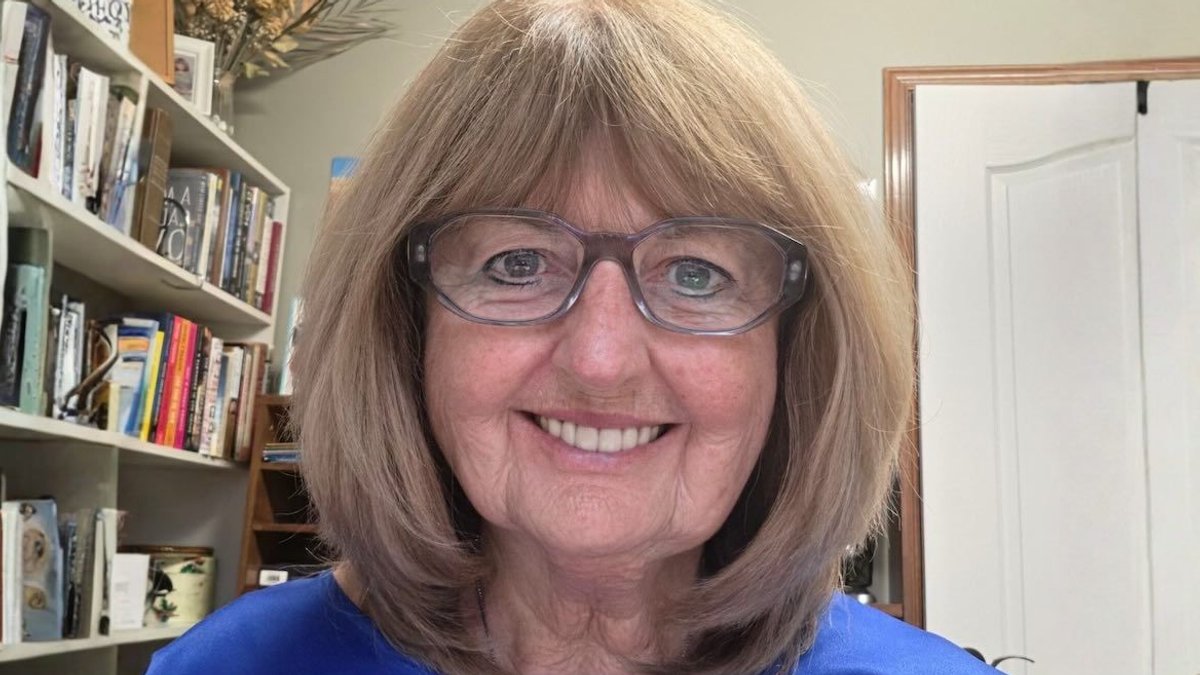
Gertrude Spatafora’s cancer diagnosis came as a shock—not because of symptoms, but after a routine colonoscopy in December 2023. The procedure, meant to monitor her long-standing Crohn’s disease, uncovered a suspicious mass in her abdomen. Blood tests and a biopsy confirmed ovarian cancer.
“I didn’t have any symptoms,” she said, later continuing, “Within, I guess, two weeks of that [her diagnosis] I was in Sunnybrook.” Her diagnosis was a “matter of chance.” By the time she learned the cancer had spread to her liver, she was already mid-treatment: three rounds of chemotherapy, a complete hysterectomy, and six more chemotherapy sessions. Radiation was added to her plan.
The news left her angry. “I was angry,” she said. “I couldn’t believe it. I thought I’ve been healthy all my life, and all of a sudden I get this, like, where did it come from?”
Faith and family became her main support as she processed the diagnosis. Spatafora, a retired teacher, relied on her daily routine, attending Mass every morning, as a way to maintain normalcy amid the upheaval. Her husband, also a retired teacher, and their two sons, Matthew and Mark, stood by her. Between them, they had three grandchildren. “My husband’s been really supportive, and the boys have been supportive, and family and friends and the people at the church,” she said, noting that with the support around her and her faith, getting through the cancer diagnosis has been that much easier.
Chemotherapy’s unexpected ease and costly treatment
Unlike many cancer patients, Spatafora didn’t experience severe side effects from chemotherapy. She could still cook, clean, and carry on with daily life. Her treatment now includes ELAHERE, an antibody-drug conjugate for ovarian cancer that costs thousands of dollars each month. The drug, which has yet to be publicly reimbursed, offers a different therapy for people like Spatafora.
Related Post: Gynecologic Oncologists Guide Families After Endometrial Cancer Diagnosis
Spatafora and her husband saved carefully during their teaching careers, “Our main trips were hockey rinks and baseball diamonds,” she said. “We can afford it for a certain length of time but if it happens that I need for years to come, God willing, I continue living but I still need it, then of course I have to keep paying for it, and you know when you see that amount coming out of the bank and you see it on your slip you think, ‘Oh, this is not exactly like $100 or $200. It’s thousands a shot, every three weeks.’ The medication is working well for Spatafora at the moment, so she and her husband have to take the financial shock in stride.
She’s been advised to start a GoFundMe, but she refuses. “If I have to deal with something, I like to handle it myself.” Instead, she’s channeling her frustration into advocacy. The medication works for her, but younger women in her position, those still supporting families or working, face a different reality. “I was looking at the younger people, like the younger women in Sunnybrook that could be in the same situation as I am,” she said. “They’ve got families that they’re still supporting; they could have jobs.”
Petition pushes for fair drug reimbursement
Spatafora is now part of a petition drive to push for government reimbursement of the drug. With 1,200 signatures so far, the effort has gained attention, though responses from officials have been slow. “We got all those signatures … we get a note back saying, ‘Well, you know, more or less, too bad. We’ll take care of it.’ … I just don’t see that being fair.”
Her frustration isn’t just about her own treatment. It’s about systemic gaps. “When they’re spending $81 million per game for the FIFA games, they could put a little aside for the health of the people,” she said. “It’s actually frustrating, and it’s very mind-boggling.”
The petition isn’t just about access; it’s about visibility. Spatafora has always believed in helping others, even as a child. “I can’t walk past somebody on the street who’s looking for some money, whether he uses it for alcohol or a hot dog, whatever, that’s his choice. My choice is to give it to him and to use it for whatever he wants,” she said. Now, her fight is to ensure others facing ovarian cancer don’t have to choose between treatment and financial ruin.





Leave a Reply