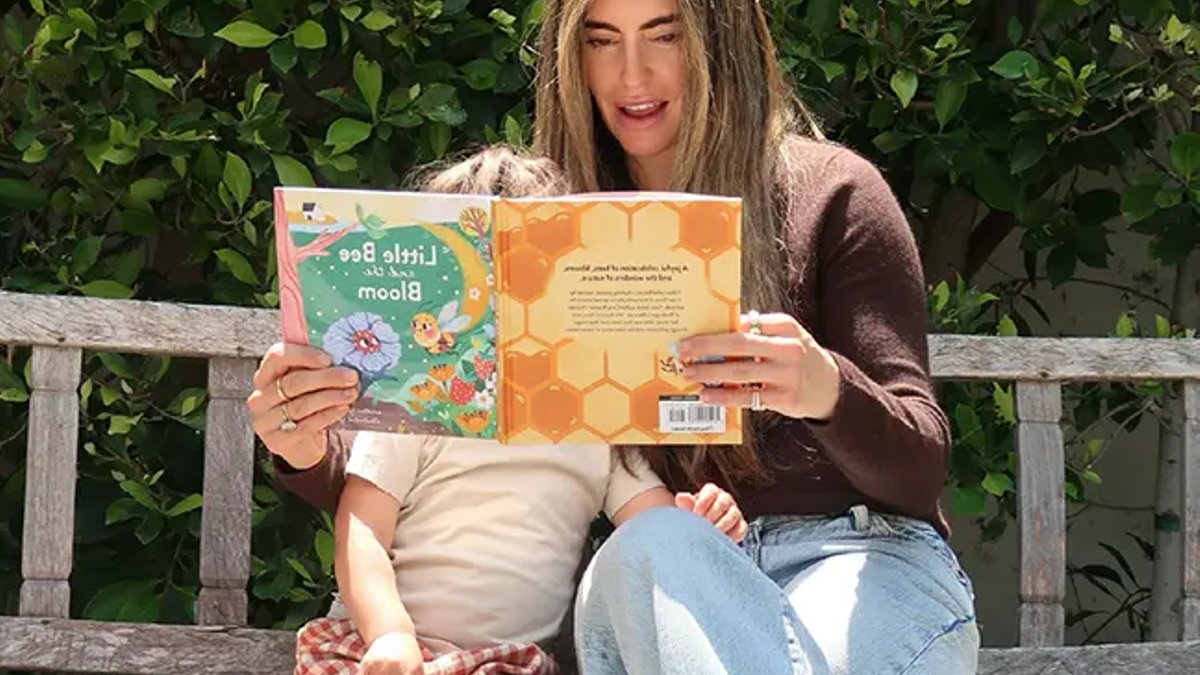
Carly Kremer has long argued that bees belong at the center of wellness conversations. Now, the founder of Beekeeper’s Naturals is shifting that narrative to a much younger audience with her debut children’s book, Little Bee and the Bloom. The story introduces kids to pollination and our connection to nature, aiming to spark curiosity rather than fear. Kremer says motherhood changed how she views environmental education, revealing that children often connect with nature more intuitively than adults do.
Before becoming a mother, Kremer focused on helping adults care for the environment. She admits she hadn’t considered how to engage children until her daughter showed her the power of simple stories. “I’d spent a lot of time thinking about how to help adults care about bees and the environment more broadly,” Kremer said. “Before becoming a mom and writing this book, I hadn’t thought a lot about how to get kids to care.”
From Anxiety to Joy in the Garden
The shift in perspective is visible in the Kremer household. The family maintains a pollinator garden, visiting it every morning to check on the plants and count the bees. This daily ritual has transformed her daughter’s relationship with the natural world.
Read Also: TCM Club Discovers Lessons From Rubin’s Creative Act
“The other day I found her singing to a bee she found in the backyard,” Kremer recalled. It wasn’t just familiarity with bees from products; it was genuine affection born from observation.
Kremer argues that modern parenting often skips the stage of love and jumps straight to anxiety. Many parents feel pressure to raise environmentally conscious children, often leading to lessons about climate change or waste reduction before a child has ever touched the dirt. “Just because we’re all anxious about the state of the world doesn’t mean they need to be,” she noted. Her philosophy is to prioritize joy first. “I’d much rather teach her to plant a garden or to protect a creature than I would to teach her to turn off the tap water.”
There is a distinct evolutionary reason for this approach. Kremer points out that humans are naturally fascinated by the natural world, a trait inherited from ancestors who needed to be hyper-aware of their surroundings to survive. “As adults we’ve been taught to ignore the natural world so much that we forget that it’s ingrained in all of us at birth to be fascinated with it,” she explained. By letting children play in the dirt and see where food comes from, the desire to protect the planet often follows naturally, without the need for lectures.
Translating Science for Small Readers
Creating Little Bee and the Bloom presented unique challenges. Kremer has spent years explaining bee science to adults, but translating that knowledge for young children required a different strategy. “Honestly? The rhyming! It was tough enough to explain the process of pollination in vocabulary that young kids could understand, but to have to rhyme too? That took a lot of drafts,” she said. The process required balancing accuracy with accessibility, ensuring the science remained intact while the language stayed simple.
Read Also: Why Preparation Matters When Taking on Bigger Outdoor Challenges
Visuals played a vital role in this translation. The images allow children to see the mechanics of nature without needing to memorize technical terms.
Kremer pictured parents reading the book on bedroom floors before bedtime, a time she describes as sacred. The goal was not to educate in a classroom sense, but to create a shared moment of wonder. “It’s an honor to get to play a small part in that for other parents and kids,” she added. This intimate setting helps ground the scientific concepts in emotional reality, making the information stick.
Practical Steps for Families
The book offers practical advice for families looking to engage with pollinators. Kremer emphasizes that growing a wild, pesticide-free yard is one of the most effective actions. “Even if you only have a terrace or a small balcony, plant native plants for bees (and other pollinators) to visit,” she advised.
For those without outdoor space, bringing plants indoors and teaching children to care for them can also build a deep emotional bond.
Read Also: Books to keep by your bed tonight
Kremer also corrects a common misconception about “saving the bees.” “Honey bees are actually only a small fraction of the bee species in the world,” she said. “Many bees don’t make honey or live in a hive.” When people talk about protecting bees, they are often thinking only of honeybees, ignoring the vast diversity of other pollinator species.
The family’s daily rituals reinforce these lessons. They hike together, stopping to look at insects and flowers. They read every night to wind down. “We try to take hikes together as a family as much as possible and we always stop to look at insects, animals or notice beautiful flowers,” Kremer said. “I wish that were more of a routine than it is right now.” These small, consistent moments build a foundation of respect for the natural world that can last a lifetime.
Kremer does not view the book as a one-off project. Whatever comes next, she hopes the core message remains.




Leave a Reply