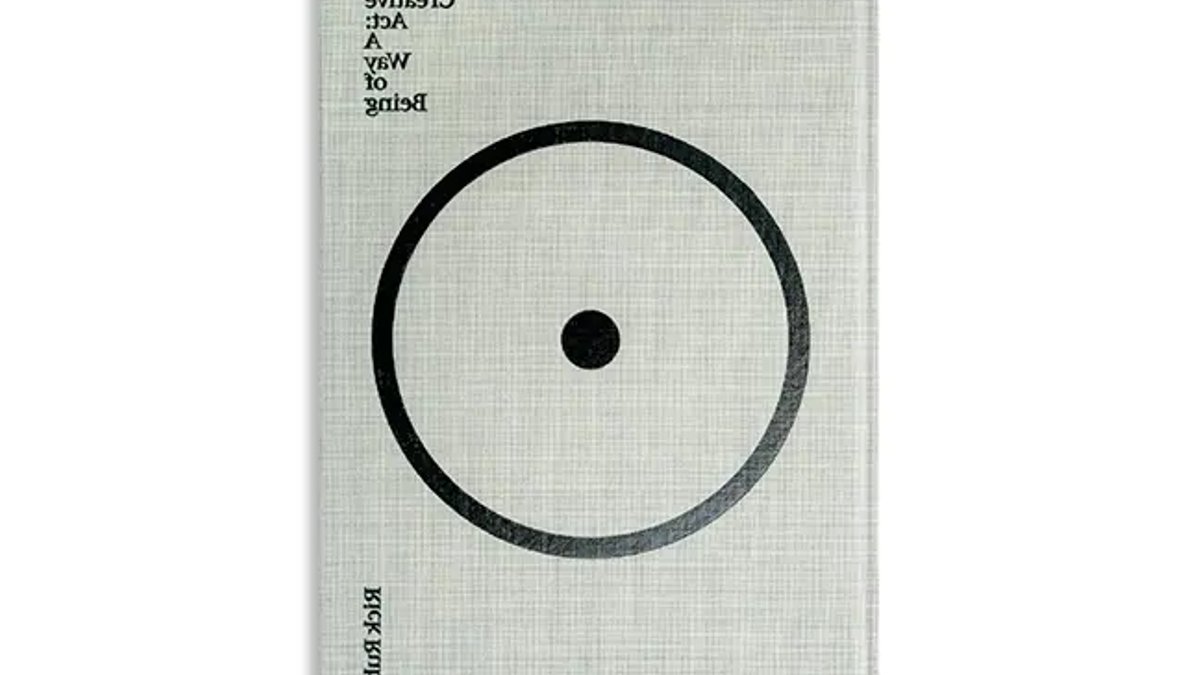
In Rick Rubin’s newest book, The Creative Act: A Way of Being, the legendary producer outlines five concrete habits designed to turn fleeting ideas into finished work.
Notice what keeps resurfacing
The opening habit focuses on attention. He explains that before any creation begins, a recurring element—whether a color scheme, a line of dialogue, or a lingering question about an unsolved problem—often pulls the mind back.
He recommends maintaining a simple log, either digital or on paper, where each spark is captured. Reviewing that list each week separates persistent signals from one‑off curiosities, allowing the creator to see patterns that might otherwise be missed.
Many artists report that this habit of tracking recurring motifs helps them prioritize projects that truly resonate, rather than chasing every passing fancy.
Identifying the thread that runs through multiple ideas can also reveal a deeper personal interest that fuels long‑term motivation.
Hold back early criticism
The second habit warns against premature evaluation. When a draft emerges, the instinct to edit line by line can extinguish the underlying notion before it gains shape.
The author suggests allocating a short, judgment‑free window for rough work. By allowing the draft to exist in an unpolished state, later refinement becomes a matter of improvement rather than invention.
Read Also: Why Preparation Matters When Taking on Bigger Outdoor Challenges
In the middle of the process, it is useful to remember that many successful products began as messy prototypes. The key is to let the core concept breathe before editing tools are applied.
Creative teams that adopt this pause often find that ideas mature organically, producing richer outcomes when they finally receive critique.
Change the setting when you stall
If progress stalls, the obstacle is frequently the method, not the notion itself. Simple adjustments, switching rooms, moving from screen to paper, or vocalizing the idea to a colleague, can reveal hidden angles.
The producer notes that a design challenge might clear up after browsing unrelated visual archives, while a written argument may sharpen when spoken aloud. The goal is to disrupt routine enough to see the problem differently.
From a broader perspective, these tweaks echo a common pattern in problem‑solving: altering inputs often yields fresh outputs. By consciously varying the environment, creators give their thoughts a chance to reorganize.
Even a brief walk outside or a change in lighting can reset mental pathways, making it easier to approach the same issue with renewed perspective.
Trim with purpose and know when to finish
The fourth habit treats editing as a discovery process. He suggests first stating the core purpose of the work, what the audience should understand, feel, or act upon, then cutting anything that dilutes that focus.
Even a clever sentence or striking image can become excess if it doesn’t serve the main intent. The final stage, according to the writer, is deciding when the piece has met its objective, not when it appears flawless.
Read Also: Books to keep by your bed tonight
He emphasizes that completion is a distinct phase; without a clear endpoint, projects can drift indefinitely. Once the essential criteria are satisfied, a single final review and a stop signal are enough.
Teams that establish a concrete finish line often avoid the endless loop of “just one more tweak,” preserving energy for future endeavors.
Integrate the habits into daily rhythm
Beyond the five individual practices, the book advises weaving them into a regular routine. By habitually logging recurring ideas, postponing critique, shifting settings, editing purposefully, and recognizing closure, creators build a resilient workflow.
Practitioners report that this integrated approach transforms creativity from a sporadic burst into a steady, reliable current.
When each habit reinforces the others, the overall system becomes self‑sustaining, allowing ideas to move forward more reliably across disciplines.
Artists, writers, designers, and entrepreneurs alike can apply these principles to accelerate progress.
These guidelines suggest that creativity is not an exclusive talent but a set of habits anyone can develop.




Leave a Reply