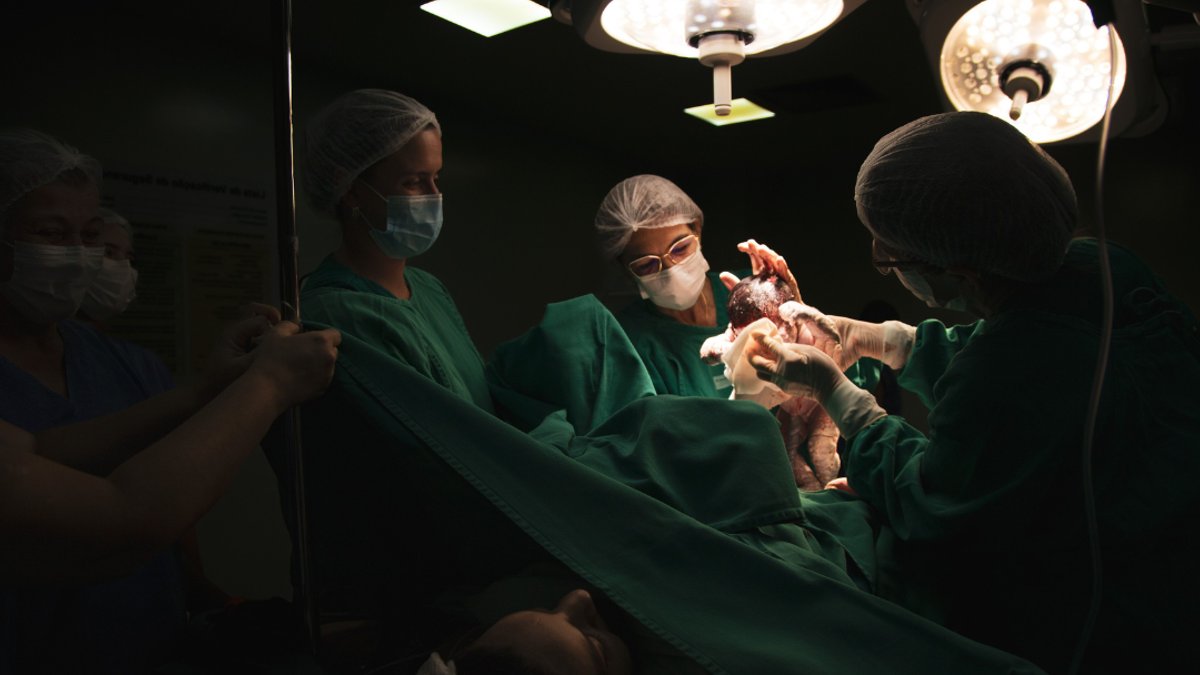
A survey of women who gave birth in South Africa’s two most populous provinces over the past decade shows that 1.79 million experienced mistreatment during labor—an average of 490 cases per day. The research, commissioned by the DG Murray Trust and Adopt and carried out by Social Surveys Africa, reveals how deeply embedded abuse has become in maternity care. Only one in three women recognized the mistreatment as wrong, and just 7% reported it, meaning 11 cases go unreported for every one documented. In a country where gender-based violence has been declared a national disaster, the findings expose how normalized abuse has become during childbirth.
The problem extends far beyond recent years. Nearly three decades ago, researchers from the South African Medical Research Council (SAMRC) documented similar patterns of physical, emotional, and verbal abuse during labor, including slaps, shaming, and humiliation. Despite growing global recognition of obstetric violence as a health concern, little progress has been made in addressing it. Julie Mentor, who leads Adopt, an advocacy organization for mothers under the umbrella of the DG Murray Trust, describes the persistence of trauma across generations. “We’ve sat with grandmothers, crying while telling us about what they’ve experienced — and devastated that nothing has changed for their own daughters.”
Rachel Jewkes, a specialist researcher at the SAMRC and lead author of the 1990s study, emphasizes the urgency of change. “Violence during childbirth won’t be rooted out without leadership from the top,” she says. “It ought to be something that’s much easier to fix than a lot of other problems in health facilities.”
Related Post: New South Africa HIV Shot Requires HIV Test and Condoms
A mandatory online training course on respectful maternity care, set to launch on September 22, aims to address these issues at their source. The 3.5-hour program, developed by the health department, will cover embedded videos and is required for all staff, from midwives to security personnel and cleaners. The course, available on the Knowledge Hub platform, can be completed at workers’ own pace. However, its success depends on enforcement, as past guidelines, such as those on birth companions and episiotomy protocols, have often gone unenforced.
The survey reveals that three-quarters of women were denied the presence of a birth companion during labor, while four in ten lacked privacy due to missing curtains. These conditions violate South Africa’s national maternity care guidelines, which explicitly allow birth companions to assist women in cases of disrespectful treatment. Resistance from some maternity staff, often citing space constraints or concerns over behavior, has prevented implementation.
Jewkes argues that enforcing companion presence would be a low-cost, high-impact solution. She proposes tracking the proportion of women with companions during labor as a way to hold facilities accountable, framing it as a fundamental right rather than an optional service. Mentor adds that simple adjustments, such as modifying shift rotations or repurposing underused spaces, could address objections without additional resources.




Leave a Reply