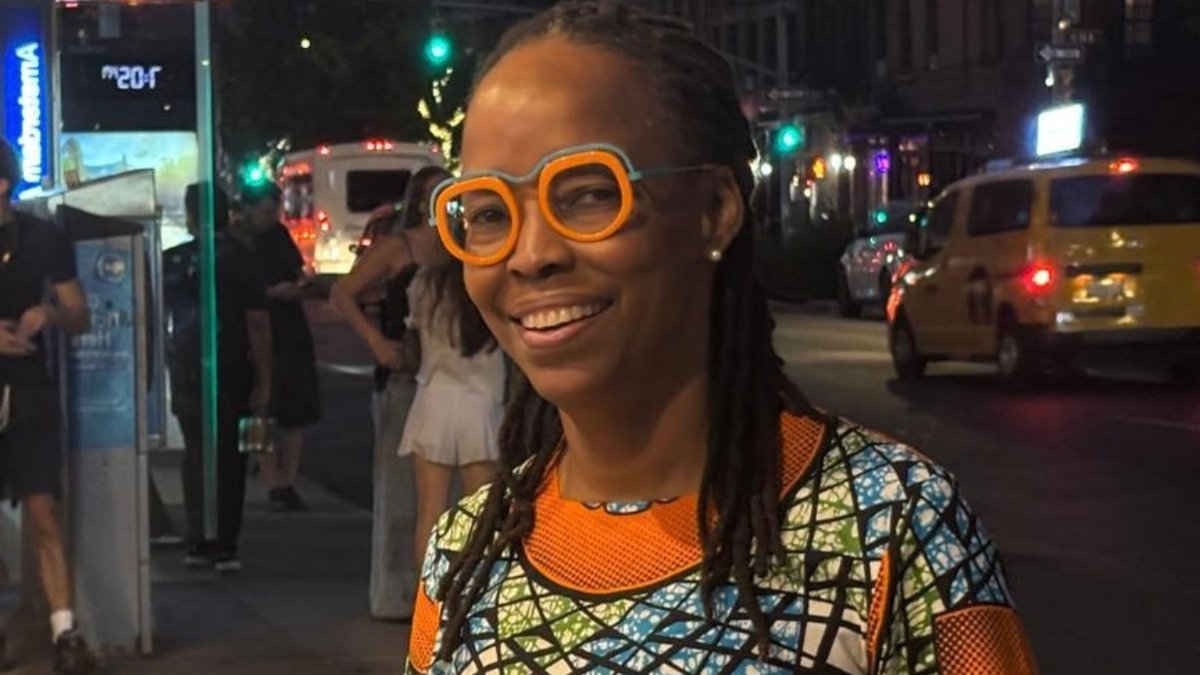
This marked the culmination of two decades spent insisting that health systems listen to the people their policies are meant to serve.
Asante’s journey began in a Soweto TB sanatorium where her parents met. She moved through six schools and a Bantustan education delivered by army conscripts, before attending university in the United States and later earning a law degree at Wits and a degree in bioethics.
A breast cancer diagnosis at 37 transformed Asante into an activist. She founded BreastSens, an organization that promotes health rights, human rights, and breast cancer education among indigent Black women in Soweto. Asante’s experience with breast cancer and subsequent illnesses, including chemotherapy-induced congestive heart failure and bipolar mood disorder, has informed her advocacy.
Early Life and Education
Asante was born in 1969 in a TB sanatorium in Soweto. Her parents were divorced before she turned five, and she and her younger brother were raised by their mother, who worked as a teacher and later as a prison officer. Asante’s early life was marked by instability, with the family moving frequently due to her mother’s job.
Asante’s education was also marked by challenges. Despite these challenges, she was able to attend university in the United States, where she studied sociology and psychology. She later earned a law degree at Wits and a degree in bioethics.
Asante’s experiences have shaped her approach to advocacy. She has worked to promote health rights and education among marginalized communities, particularly Black women in Soweto.
A New Chapter
In September last year, Asante delivered the lived-experience address at a global meeting on NCDs and mental health at the UN General Assembly. However, shortly after her return to South Africa, she faced a new wave of health challenges. In February, she developed abdominal pain and was urgently admitted for surgery to remove an inflamed appendix.
Asante’s health issues have continued, with diagnoses including functional neurological disorder and anxiety. Despite these challenges, she remains committed to her advocacy work, using her experiences to inform her efforts to promote health rights and education among marginalized communities.
Asante’s work has taken her to the global stage, where she has spoken out against the commodification of women’s diseases by marketing companies. She has also criticized the global health advocacy system for its lack of representation and inclusivity. Despite these challenges, Asante remains committed to her work, using her voice to amplify the voices of marginalized communities.
In 2012, Asante formalized her gratitude for her life by taking the words “Kwanele” and “Asante” as her legal name. “Kwanele” is isiZulu for “it is sufficient,” and “Asante” is Kiswahili for “thank you.” This name change reflects her commitment to her healing journey and her advocacy work.
Asante’s work has taken her to various parts of the world, including Geneva, where she has been a member of the World Health Organisation’s civil society working group on NCDs. She has also been involved with the African Organisation for Research and Training in Cancer, serving as the secretary general in 2020.
Advocacy and Criticism
Asante has been a fierce critic of the global health advocacy system, arguing that global NGOs and health organisations often advocate for patients, families, and communities in generic and potentially extractive ways.
Asante’s criticism of the “pink ribbons” movement, which she sees as the commodification of a woman’s disease by marketing companies, has been a hallmark of her advocacy. She has instead taken a community-based approach, working with women in Soweto to promote health rights and breast cancer education.
Asante’s commitment to her work is evident in her decision to continue advocating despite her own health challenges.





Leave a Reply