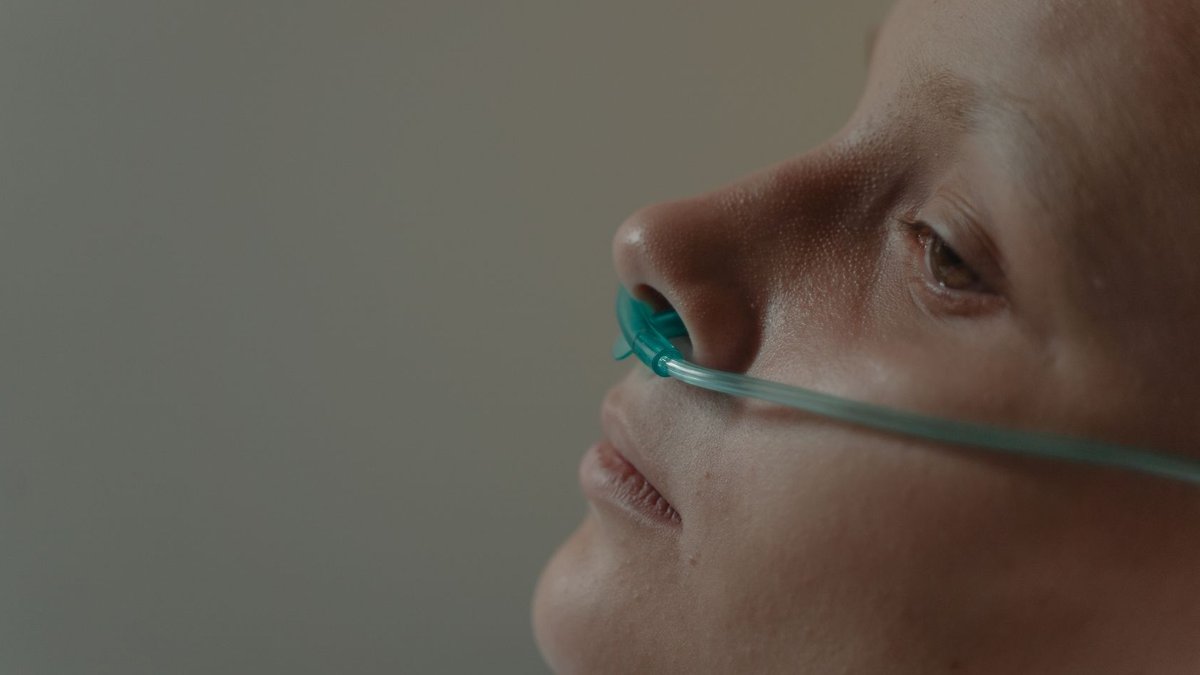
Kelsie Mathews has spent most of her life managing a series of health problems—endometriosis, lupus, breast tumors, fibromyalgia, and seizures. In October, doctors diagnosed her with systemic mastocytosis, a rare disease affecting about 32,000 people in the U.S.
“It’s been a journey,” Mathews said. “I think I’m up to eight different diagnoses at this point.”
The Long Road to a Rare Diagnosis
Mathews first noticed unusual symptoms in 2021, four years before receiving her systemic mastocytosis diagnosis. She woke one morning swollen with over 100 pounds of fluid. Her feet turned purple and wouldn’t fit into her flip-flops. At the emergency room, a doctor told her some people were simply prone to swelling.
“I was like, ‘Yeah, that’s not a thing,’” she said. “My first thought was that it was my heart or something. It just didn’t make sense.”
Over the next few years, new symptoms appeared. Hot baths that once eased her endometriosis pain left her covered in hives. Lesions spread across her skin and remained for months. Gastrointestinal issues worsened. During an event, she began sweating uncontrollably, prompting strangers to ask if she was all right.
“I said, ‘I don’t know what’s happening right now,’” she recalled. “I just couldn’t stop sweating. I was also feeling lightheaded and dizzy.”
The symptoms didn’t seem connected. Because she already lived with multiple chronic conditions, identifying the cause proved challenging. The breakthrough came after a colonoscopy and endoscopy revealed abnormal mast cells in her colon. A gastroenterologist suspected systemic mastocytosis and referred her to a hematologist-oncologist.
“As they started asking about my symptoms, I realized, ‘Wait…yes. I’d had the swelling and I’d been having allergic reactions to hot water,’” Mathews said. “It was a very profound moment because I didn’t feel crazy anymore.”
Related: MPN Patients Unaware of Financial Aid Eligibility
A bone marrow biopsy and blood work confirmed the diagnosis at City of Hope in October 2025.
Treatment Struggles and Clinical Trials
Doctors prescribed avapritinib (Ayvakit), an oral medication for advanced and indolent systemic mastocytosis. Her care team started her on the highest dose due to the severity of her symptoms. Within three weeks, she was back in the hospital with severe side effects—fatigue, nausea, diarrhea, and hair loss.
“It was just so much,” she said. Her long red hair began turning white at the roots and falling out in clumps.
Seeking answers, she traveled 16 hours round-trip to Stanford Medical Center to consult a specialist. The visit was emotional. “I cried a lot,” she recalled. “He was the most empathetic person I’ve ever met. He told me I’m not crazy.”
The Stanford doctor is now coordinating with her City of Hope team and working to enroll her in a clinical trial for bezuclastinib, an investigational treatment under FDA review. A decision is expected later this year.
“He’s trying to get me on it faster, so I don’t have to wait until December,” Mathews said. In the meantime, her doctors plan to reintroduce Ayvakit at a much lower dose, gradually increasing it if she tolerates it well.
Adjusting to a New Reality
Mathews’ health forced her to step back from her career in film, television, and live performances.
“I always was in front of the camera, behind the camera, or on stage,” she said. “But I’ve had to take a step back because when you work in film and TV, you’re usually on set for 16- to 18-hour days, and my body doesn’t have that capability anymore. I only get about two good hours a day.”
Related: Prostate cancer patients get new treatment hope
While she’s no longer performing, she hasn’t stopped creating. She continues to write music and document her health journey, hoping her story will help others.
“I miss creating and being able to perform,” she said. “Music has always been my therapy. Performing is therapy too, because when I’m in someone else’s shoes, I’m able to not focus on my own problems.”
Her friends have been essential. They walk her dogs, bring meals, drive her to appointments, and help pay bills. “Literally, I would not be surviving right now if I didn’t have my friends,” she said. “I’m very lucky. I found my tribe, and they’re the best humans in the world.”
Accepting help wasn’t always easy, but Mathews said it’s necessary when living with a rare disease. She’s become more open about her journey, sharing her story on social media to let others with systemic mastocytosis know they’re not alone.
“If I can make a positive from the negative, I’m going to,” she said. “Sharing my story has been huge because I know someone out there needs to hear it. There’s always someone who can relate.”
She invites people with the disease to reach out if they need support. “If anyone needs advice on managing this or assistance with referrals, they’re welcome to DM me,” Mathews said. “If I can help, I will.”
Her palliative care doctor once noted in her chart that she uses humor to cope. “To which I responded, ‘So you’re telling me I’m funny?’” she said with a laugh.





Leave a Reply